











































Save Taxes, Protect Your Wealth, Live Freely
How flag theory makes it possible — not just for digital nomads
Reading time: 14 minutes
Reading time: 14 minutes
At a time when governments are exerting more control over income, freedom of movement and personal data, many people are looking for greater personal responsibility and independence. Saving taxes, protecting wealth from outside access and living freely without being dependent on a single state — this is exactly where a concept that was once known mainly to insiders comes in: flag theory.
Flag theory is a strategic approach to international lifestyle design, tax optimization and asset protection. It was developed and popularized in the 1980s by American investment adviser Harry D. Schultz. Its purpose is to help people divide their lives geographically so they can legally and fiscally use the best each country has to offer — while strategically avoiding the disadvantages.
Originally, the model consisted of three so-called “flags”: citizenship, tax residency and the location of the business. Over time, the concept evolved and expanded to five or more areas of life — including asset storage, places of stay and digital infrastructure.
Today, flag theory is not only relevant for digital nomads or Perpetual Travelers (PTs), but also for entrepreneurs, investors and expats seeking sovereignty and protection for their resources in an increasingly unpredictable world. It is not a loophole, but a smart, legal structure for reducing your exposure to state systems — or at least for managing that exposure deliberately.

The main goal of flag theory is not simply to use laws or optimize taxes — it is to keep your personal footprint in the system as small as possible.
The fewer points of interaction you have with one single state — whether through residency, company domicile, family or citizenship — the fewer obligations, risks and restrictions affect your daily life.
Less interaction means: fewer obligations.
Fewer obligations mean: more flexibility.
The art lies in choosing very wisely which countries you set your flags in — meaning the countries you “cooperate” with in individual areas of life. The criteria are legal certainty, reliability, privacy, tax framework conditions and respect for the individual.
This creates a life based not on national attachment, but on strategic design — with the goal of remaining as free as possible, regardless of political moods, stricter laws or economic crises.
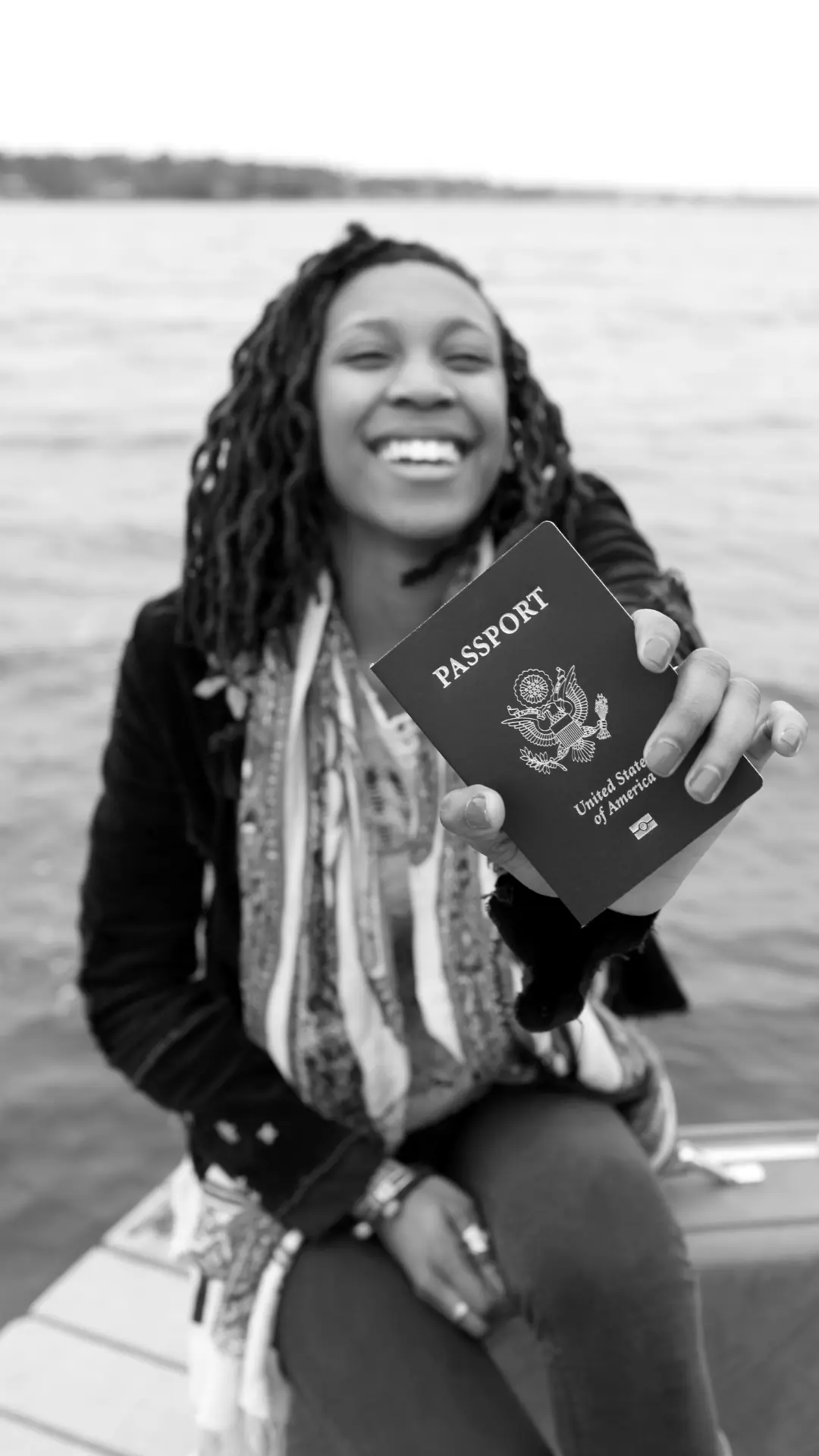
The first flag represents your citizenship — the country whose passport you hold. This decision has major implications for your tax obligations, your freedom of travel and your security in a crisis.
Some countries, such as the United States, tax their citizens even if they live abroad permanently. In Germany, there is also public discussion about introducing a similar tax connection to the German passport — making the concept of alternative citizenship even more attractive.
Since 2024, Germany has officially permitted dual citizenship, which has made the path to a second passport significantly easier for the first time. If a passport-based tax obligation were introduced in the future, it could make sense to give up German citizenship in order to legally avoid that rule.
Many countries offer programs through which you can obtain second citizenship by means of investments, real estate purchases or contribution-based systems — often within just a few months.
Examples of “smart” passports:

The second flag concerns your formal residency, meaning the country where you are officially registered — and ideally where you actually spend time.
Important distinction: residency is not necessarily the same as tax residency.
Example: You can officially have residency in Spain, spend fewer than 183 days per year there and still not trigger tax residency.
The main goal of flag theory is to achieve maximum personal and financial freedom by strategically dividing your life across several countries. But it is no longer just about tax optimization or asset protection — the concept reaches much deeper into real life.
In times of growing uncertainty — whether caused by political instability, economic crises or excessive state intervention — one question becomes increasingly important:
How well are you treated as a person in a given country?
In many countries, tourists and foreigners are often treated better than registered residents or citizens. As a registered citizen, you are transparent to the tax system, legally obligated and often socially constrained. As a guest, by contrast, you benefit from visa freedoms, special rights or lower expectations without automatically being treated as a source of revenue.
Another reason is security and basic provision. Where can you receive good medical care in an emergency, enjoy political stability, and access clean water, food and functioning infrastructure?
And finally: quality of life. Many people also use flag theory to live specifically where the climate, culture, prices or mentality fit them — without the obligations that often come with fixed residency.
Residencies are not merely official permissions for a long-term stay; they can open up far more strategic options. Learn what options exist and how to use residency as a freedom flag here: establish residency abroad.

The third flag concerns the place where you officially operate your company. Many countries offer attractive conditions: low corporate taxes, little bureaucracy and modern structures. But the legal and practical day-to-day reality is often more important than the nominal tax rate.
These are the points to consider when choosing a company jurisdiction:
Advantage: US LLCs can be tax-efficient because, with the right structure and no US-sourced income, no corporate tax is due on foreign business. Formation is straightforward, the structure is flexible, and US companies enjoy high international banking acceptance.
Disadvantage: In practice, however, it is becoming increasingly difficult to open a business account without a real US presence such as a business address, contact person or substance. Many banks and payment providers now refuse to work with non-resident LLCs — or impose strict KYC, substance and compliance requirements.
Advantage: Cyprus can be strong for EU structures, holding models, IP income and equity-financed companies. Particularly interesting features include holding privileges, the IP box, notional interest deduction and the general absence of withholding tax on dividends and interest paid to non-residents.
Disadvantage: The 15 % corporate tax rate is no longer a standout advantage. Today, Cyprus is less about the headline tax rate and more about special rules and clean structuring. In practice, banking remains difficult: strict compliance, complex account opening and, in some cases, a negative perception among international banks.
Advantage: Shareholder tax refund model, EU-compliant, but with more demanding accounting.
Disadvantage: The refund must be applied for afterwards, which often takes several months and creates additional administrative work. There are also high requirements for accounting and substance documentation, especially for companies managed from abroad.
Advantage: Highly respected, stable business location with a strong legal system. Foreign income is tax-free as long as it is not remitted to Singapore. Only locally generated profits are subject to the regular corporate tax rate of around 17%.
Disadvantage: High formation and administration costs, banking is strongly focused on Asia, account opening without local presence is difficult, and there is no IBAN account.
Advantage: Only 10% corporate tax and 5% withholding tax on dividends, full EU membership, simple formation and low operating costs. This can be especially interesting for companies that operate within the EU while keeping their tax structure lean.
Disadvantage: Weak reputation with banks, local banking is often outdated and bureaucratic, and language barriers can be an issue.
Independently of company formation, Bulgaria can also be interesting as a personal residency option. We explain how residency in Bulgaria works and what to watch out for here: establish residency in Bulgaria.
An international company has to fit your business model, your tax residency and your overall setup. Learn what advantages international companies can offer and which specific countries we can support you in here: form an international company.

The fourth flag in flag theory stands for the place where you store your assets securely — separate from the state where you live or the country where you operate your company. The aim is to reduce exposure to access by authorities, currency risks, inflation and political interference as far as reasonably possible.
While local bank accounts are often directly linked to tax obligations and reporting duties in the residency country, international banks — for example in Switzerland, Liechtenstein, Singapore or the UAE — can provide greater privacy, stability and currency diversification.
Georgia also remains relevant — no longer because of anonymous structures, as it has been a CRS member since 2023, but because of its stable banks, high crypto acceptance and straightforward account opening for foreigners.
Tip: Georgia remains one of the most practical locations for international account diversification: stable banks, multiple currencies, high crypto acceptance and account opening for foreigners, even without an in-person appointment. If you want to open an account in Georgia remotely, you can find all the details here: open a Georgia bank account.
One often overlooked yet especially interesting location is Cambodia: the country is not part of the CRS, allows uncomplicated account openings and is considered extremely crypto-friendly.
Important: the era of anonymous numbered accounts is over. But in many countries, ownership does not automatically mean tax liability, as long as you are not tax resident there.
Physically storing gold, silver and platinum outside the banking system can provide protection against bank closures, inflation and digital forms of interference.
Locations such as Switzerland, for example Zurich, Liechtenstein or Singapore offer storage in duty-free zones — which, under certain conditions, eliminates VAT on purchase, especially for silver and platinum.
Bitcoin, Ethereum and other cryptocurrencies are now much more than speculation — in flag theory, they serve as mobile, borderless “digital gold”.
In some countries, you can sell crypto tax-free after holding periods — particularly interesting for structured wealth management. In other countries, there is no crypto-specific taxation at all — allowing crypto gains to be realized tax-free regardless of holding period or origin, depending on the local rules.
Anyone who holds assets in only one country, one currency or one banking system remains vulnerable. Learn how to structure your wealth internationally, spread risk and reduce access points here: asset protection.

The fifth flag concerns one of the most personal aspects of your global setup: Where do you spend your time? Where do you live, relax — or recharge?
In the context of flag theory, your place of stay does not necessarily have to be your tax residency or company jurisdiction — it is the place that gives you the highest quality of life without unnecessary obligations.
Idea: Live where you are treated better as a tourist than as a local.
In many countries, you enjoy more rights, more tolerance and fewer burdens as a visitor. You are not subject to local tax systems, nor are you part of the compulsory framework of the welfare state. In short: a high-freedom, low-obligation lifestyle.
You can set the place-of-stay flag more than once — seasonally, strategically or completely spontaneously. Whether winter in Thailand or summer in Europe, the point is not to chain yourself to one system, but to use the best of many.
The fifth flag is your room for enjoyment, individuality and freedom of movement. It allows you to live in countries that treat you as a valued guest — not as an exploitable citizen. With smart planning, you can keep your tax position clean, enjoy maximum freedom and still feel at home in the world.

The sixth flag concerns your tax residency — the country where you are officially registered as a taxable person, or not registered as one at all. For many digital nomads or Perpetual Travelers (PTs), it can work to have no tax residency, as long as certain conditions are met:
The larger your business becomes, the more advantages a clear, deliberately chosen tax residency can bring: it reduces risks, makes management easier, for example with dividends or company structures, and gives you a solid basis for clean banking and reinvestment.

In addition to secure asset storage, covered by Flag 4, the next question is: Where do you actively invest and build real value? The investment flag concerns capital that is not mobile — such as real estate, company shares or tangible assets — and therefore needs to be placed deliberately and strategically.
In many countries, especially in Asia, such as Thailand, Indonesia and Vietnam, direct real estate ownership by foreigners is legally restricted or prohibited. Often, only long-term lease models or complex company structures are possible — with the corresponding risks.
The rule of thumb: own real estate only where ownership truly remains ownership.
Important: as a real estate owner, you are visible and reachable for tax and legal purposes, even without residency in the respective country.
What to consider before buying:
Many countries have:
Examples:
Tangible assets such as art, watches, classic cars, whisky, wine or rare collectibles are becoming more important — especially for investors who think outside the banking system.
Advantages of this investment category:
Discreet investment form: no public register, often no reporting obligation

The healthcare flag is not only protection for emergencies; it is a deliberate decision: Where do you want to receive treatment, undergo surgery or get preventive check-ups — regardless of your residency?
Especially for planned procedures, dental treatment or check-ups, you can use locations around the world that combine medical quality with fair costs.
Many of these countries are set up to care for you as a self-paying patient without bureaucracy, without long waiting times and with complete packages including transfers, clinic and hotel.

The classic five, or six, flags form the foundation of flag theory. But anyone who wants to build a structure that is genuinely robust — especially as an entrepreneur, investor or family with responsibilities — should secure additional areas strategically:
Where are your data, domains, cloud access and communications located?
Very few people consider that your digital life is also vulnerable — through domain seizures, cloud access or account suspensions. Anyone who wants to remain independent should place hosting, domains and communication services in data-secure, legally stable countries — for example Iceland, Switzerland, Norway or offshore.
Where do your children grow up — and where do you want them to be legally protected?
For families, the key question is in which country children can access good education, personal freedom and legal protection. International schools, politically stable countries with clear education systems — or simply a place with high quality of life — belong in a long-term family strategy.
In which country do you want to protect contracts, bring claims or handle inheritance if things get serious?
For entrepreneurs and investors in particular, it matters which legal system governs disputes. A good investment country does not automatically mean you will also find a fair court there. Anyone with more complex structures should think about jurisdiction, trust locations or arbitration clauses.
Where are you insured — against what, and with which legal protection?
Liability, asset protection, legal protection or professional liability: many global entrepreneurs use international policies that are not tied to a residency — for example through Liechtenstein, Luxembourg or international insurance groups.
When things get serious — where can you go without a visa, without an application and without stress?
Political unrest, pandemics or bank closures show that a second, independent safe haven can be vital. Many people use countries such as Paraguay, Uruguay, Albania, parts of Latin America or island states with simple residency rules for this purpose. The goal is security, neutrality and a long-term right to stay, even when all other doors close.
The more responsibility you carry — whether for your wealth, your company or your family — the more it can pay to set additional flags deliberately. Modern flag theory is not a “trick”, but a holistic life model that gives you long-term freedom, protection and room to shape your life — in a world that increasingly limits exactly those things.
Last updated: 18 May 2026