









































Mexico Tightens Tax and Residency Controls
Why Relying on a Single Residency Is Not a Real Strategy
Reading time: 6 minutes
Reading time: 6 minutes
Many expats in Mexico have repeated the same sentence for years:
“Nobody here cares about taxes.”
And for a long time, Mexico was indeed considered one of the easiest countries for foreign residents. Americans, Canadians and many Europeans lived in the country permanently, operated online businesses abroad, managed investments or earned international income without declaring it fully in Mexico.
This worked mainly because there was a significant gap between the law and its actual enforcement. Many tax rules already existed on paper, but in practice, foreign residents were often left alone.
That now appears to be changing fundamentally.
Mexico is increasingly connecting its tax authorities, banks, immigration systems and international data interfaces. At the same time, political pressure within the country is growing. In cities such as Playa del Carmen, Puerto Vallarta and Mexico City, property prices have risen dramatically for years, while increasing numbers of foreigners earning in dollars dominate local markets.
What was long celebrated as an economic benefit is increasingly becoming a public debate about gentrification, tax fairness and economic displacement.
The greatest risk often does not arise when a country suddenly introduces new laws. It arises when existing rules are suddenly enforced consistently.
Mexico is currently demonstrating very clearly why a single residency is not a real strategy.
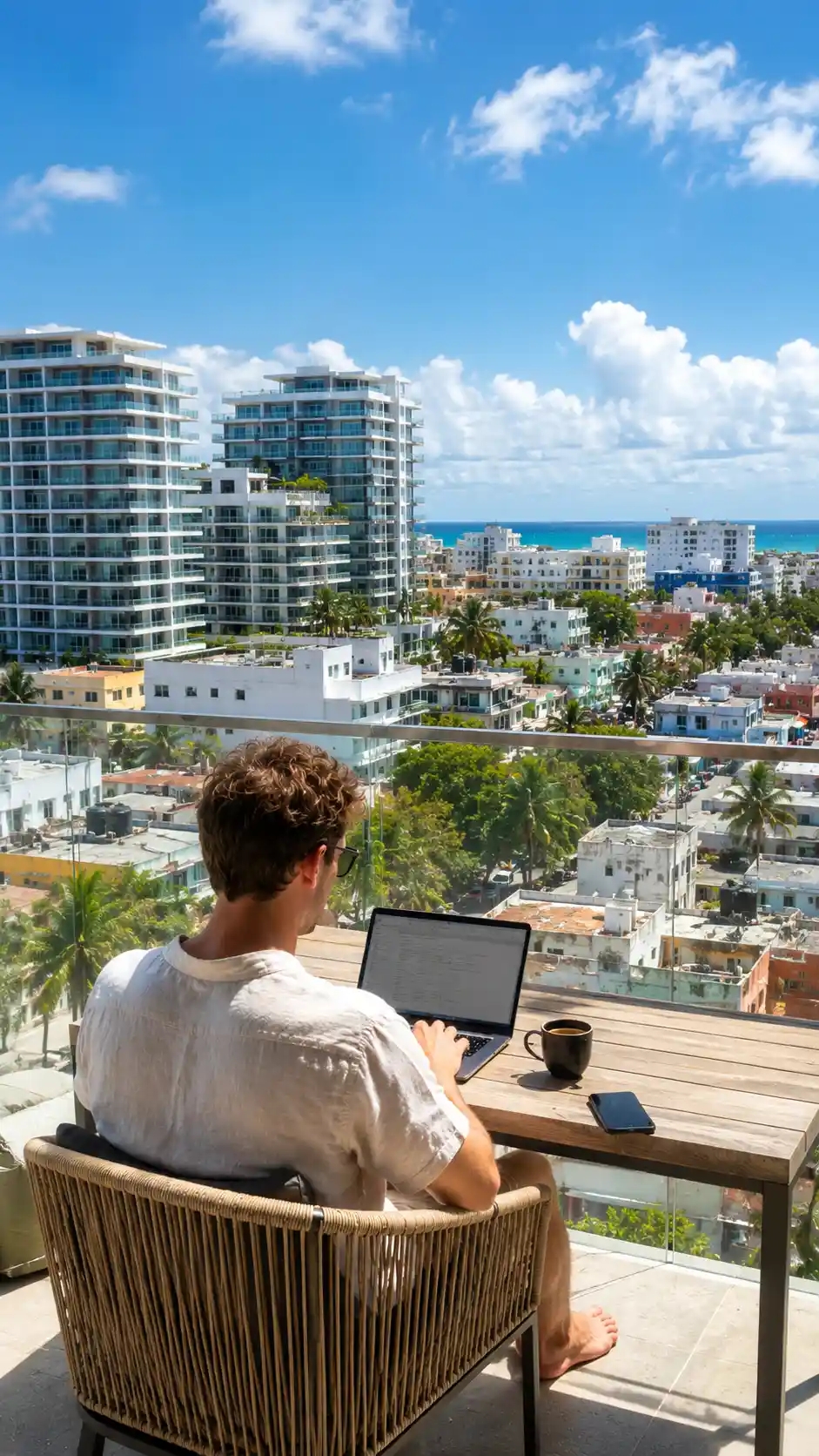
In recent years, Mexico developed into one of the most popular destinations in the world for expats, entrepreneurs and remote workers.
Americans and Canadians in particular moved to the country in record numbers. Mexico also became increasingly attractive to many Europeans, not only because of its climate and quality of life, but above all because of its comparatively low barriers to entry.
While many Western countries became increasingly regulated, Mexico was long regarded as flexible, pragmatic and economically open. Residence permits were relatively easy to obtain, living costs were significantly lower than in many US or European cities, and international income could be managed from abroad with comparatively little difficulty.
The massive remote-work boom following the pandemic added further momentum.
Suddenly, millions of people could work independently of location. This created entire international parallel communities in cities such as Playa del Carmen, Puerto Vallarta, Mérida and Mexico City.
Cafés, coworking spaces, Airbnb business models, international communities and foreign-funded property developments appeared almost overnight.
To many people, Mexico seemed like the perfect escape:
But this rapid growth increasingly created tensions within the country.
While many foreigners continue to earn their income in dollars or euros, large parts of the local population still earn in pesos.
This has created a significant economic imbalance in many regions.
Property prices have risen rapidly, rents have surged and entire neighborhoods have changed completely within only a few years. In popular areas such as Roma and Condesa in Mexico City, as well as parts of Playa del Carmen and Puerto Vallarta, the development is now openly associated with gentrification and economic displacement.
Many small local businesses can barely compete with international capital. At the same time, a growing share of the population feels that their own cities are increasingly being redesigned for foreign buyers, investors and remote workers.
And this is precisely where the political mood begins to change.

Many of the current developments may appear sudden at first. In reality, many of the relevant tax rules have existed for a long time. They were simply not enforced consistently against foreign residents.
That is exactly what is beginning to change.
Mexico's tax authority, SAT, has already announced plans to significantly expand its audits in the coming years. At the same time, banks, tax authorities and immigration systems are becoming increasingly connected through digital systems.
A foreign resident living in Mexico today leaves far more traces in the system than only a few years ago.
Many banks and financial service providers now pay much closer attention to tax registration, RFC data and the traceability of economic activities. Account movements, property purchases, high credit-card spending and visible assets can also be compared much more easily with officially declared income.
International data exchange through systems such as CRS and FATCA adds another layer. Information about foreign accounts and financial structures can increasingly be transferred automatically between countries.
The separation between immigration status and tax status is also gradually becoming less clear.
Someone applying for residency, meaning a residence permit, may simultaneously signal to the Mexican authorities that their main personal base is permanently located in the country, with potential tax consequences.
Many expats make the same mistake:
They confuse limited enforcement with long-term security.
Countries often do not need to introduce entirely new laws to expand their control. Consistently enforcing existing rules may be enough.
And that is exactly what appears to be happening in Mexico.
What operated as a “grey area” for years is becoming increasingly traceable through digital systems. Banks report data, international interfaces are expanding and tax audits can now be performed with greater automation.
This changes not only Mexico itself, but also the risks faced by anyone who has built their entire structure around a single country.
Not necessarily.
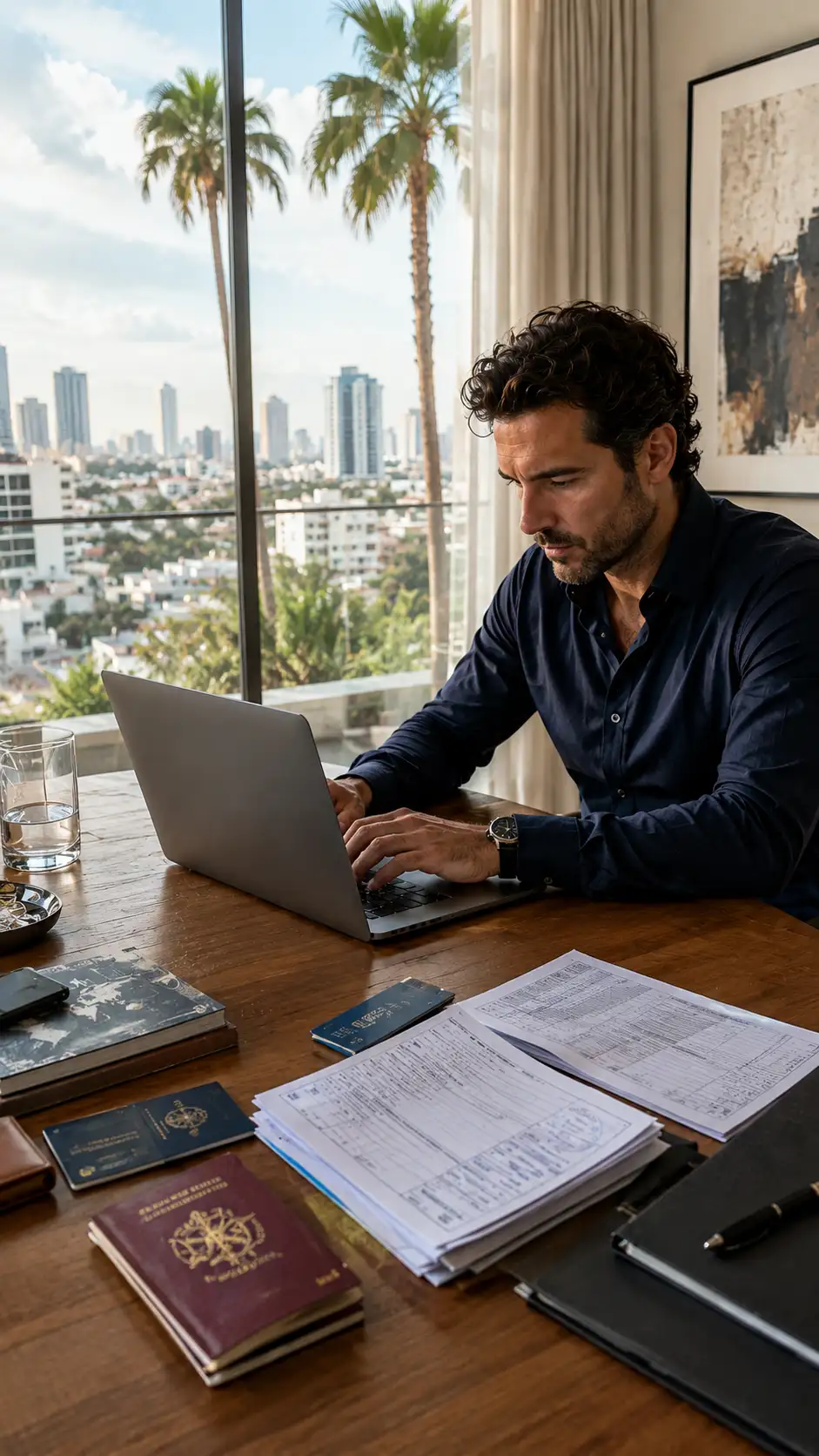
This is precisely where many people make the mistake of treating tax residency and a residence permit as the same thing.
Mexico generally taxes the worldwide income of tax residents. However, that does not automatically mean that every legal resident immediately becomes a Mexican tax resident.
To avoid this under the current framework, many internationally structured self-employed professionals and entrepreneurs pay attention to a specific combination of factors.
The most important factors include:
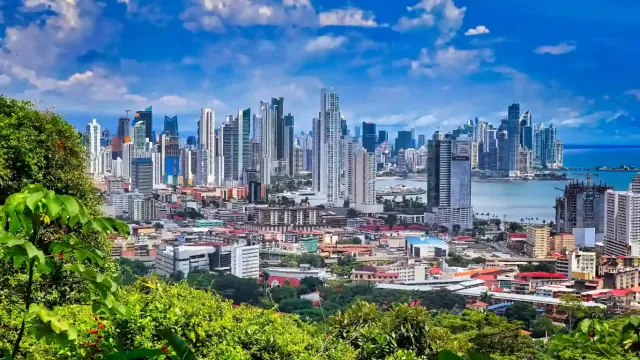
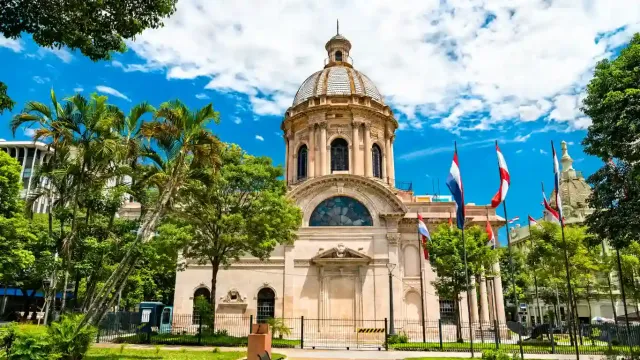
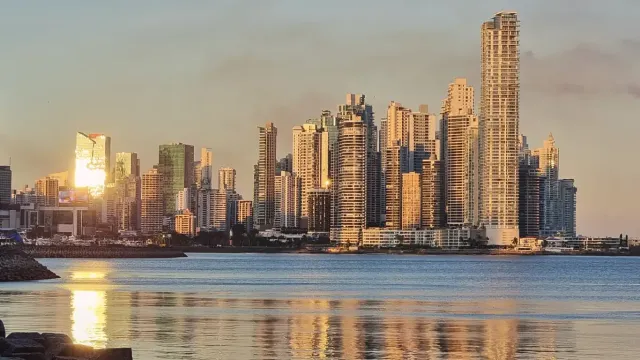
A documented tax-residency anchor can, for example, be established in countries with territorial tax systems such as Panama or Paraguay.
Under Mexican law, the concept known as the center of vital interests plays a particularly important role.
Someone who:
will continue to have strong arguments against being classified as a Mexican tax resident, even if controls become stricter.
In these situations, only Mexican-source income is generally taxed, rather than worldwide income automatically becoming taxable.
This is exactly why internationally structured entrepreneurs do not focus only on obtaining a residency. They focus on the wider tax structure.

Mexico will remain one of the most attractive countries for international entrepreneurs, expats and freedom-oriented people.
The country continues to offer significant advantages:
A Mexican residency can also remain highly useful from a strategic perspective, provided you understand that legal residency and tax residency are not automatically the same thing.
This is why internationally structured entrepreneurs are watching the current developments closely.
Mexico is currently demonstrating something that extends far beyond this one country:
Countries are becoming more digital. Oversight is becoming tighter. International data exchange is increasing. Political attitudes can also change faster than many people expect.
The real risk is therefore not moving abroad.
It is becoming completely dependent on a single country.
Anyone seeking to protect international freedom over the long term needs:
This is also the principle behind flag theory:
Do not tie everything to a single country. Instead, diversify residency, business, assets and tax structures strategically across multiple jurisdictions.
Real freedom does not come from a single residency. It comes from strategic independence.
Last updated: May 13, 2026