








































Retire Abroad: Where Can Your Pension Fund a Better Life?
A comparison of 14 countries outside the EU: how much pension income you need for residency, what everyday life may cost, and how healthcare works.
Reading time: 30 minutes
Reading time: 30 minutes
Are you retired and finding that your pension no longer goes as far as it used to? Once rent, utilities, groceries and insurance are paid, there may be so little left that even a broken washing machine becomes a financial problem. You calculate every grocery bill. You think twice before going out for dinner. And the kind of holidays you once enjoyed? Often no longer realistic.
What remains are the memories. Evenings by the sea. Breakfast outside. Weeks when life simply felt lighter.
Retirement was supposed to look different. You worked, paid in and took responsibility. This was meant to be the time to enjoy life. Instead, you are expected to accept that less and less of it fits within your budget.
You do not have to accept that as inevitable.
Your pension does not disappear when you move abroad.
You do not have to spend your retirement in the same country where you earned your pension. Your place of residence is a choice.
In the right country, the same pension can pay for a more comfortable home, fresh food, day trips and an
everyday life where every small pleasure does not have to compete with the next bill.
Living where
other people go on holiday. All year round. That can be a realistic option even without a fortune in the
bank.
But that decision should not be based on the best-looking beach photo. What matters is whether your pension actually qualifies you for residency, how much money remains after all major costs, and what happens if you need medical care.
That is why we compare 14 countries outside the EU. We look at the residency options, the financial requirements for residency, healthcare and the details that can turn an attractive idea into either a new home or an expensive mistake.

The answer starts with a distinction many retirement-abroad rankings miss: the income a country requires for residency is not automatically the amount you need to live there comfortably.
A residency program that accepts a pension of US$1,000 (around €860) does not mean rent, food, insurance and trips home will also fit within US$1,000. The opposite can happen too: everyday life may be affordable, while immigration rules require a higher pension or additional funds in the bank.
With €1,000 a month, your options are narrower. Affordable long-term rent, a modest lifestyle and workable healthcare become especially important. Without savings, the move itself can already strain the budget. Flights, deposits, translations, fees and the first few weeks all have to be paid before lower living costs start to help.
At €1,500 a month, there is more breathing room. But you still should not assume that a prime beach apartment or comprehensive private senior health insurance automatically fits the budget. At €2,000, the range of options becomes wider again. Whether that creates a comfortable retirement still depends on whether you live alone or as a couple, whether you need a car, and what your medical costs look like.
A simple example shows why: if your monthly housing cost falls from €850 to €450, you save €400. If the healthcare cover you need costs another €250, only €150 of that saving remains. These are deliberately illustrative figures, not price quotes for any specific country. They show why the full calculation matters.
Work with the money you actually have left after taxes and healthcare costs. And use real rental listings in the location you are considering, not national averages.

Moving abroad does not automatically change your pension entitlement, but it can change how your income is treated for tax purposes. The key questions are where your pension comes from, where you become tax resident, and what type of pension you receive.
There is no single international rule for pension taxation. Your new country of residence applies its own domestic tax rules, while the country paying the pension may also retain taxing rights.
A tax treaty between the pension's source country and your country of residence can change that outcome. Tax treaties may assign taxing rights to one country, allow both countries to tax with a credit mechanism, or apply different rules to state pensions, social-security pensions, occupational pensions and private pensions.
That means two retirees living in the same country can face very different tax outcomes simply because their pensions come from different countries.
For a deeper look at how residency, tax residency and different types of income interact, see our guide to living tax-free.
Before moving, check your own pension at both ends: the rules in the country paying it and the rules in the country where you plan to become tax resident, including any applicable tax treaty. The country comparisons below therefore focus on residency, income requirements, healthcare and practical suitability rather than individual pension-tax outcomes.
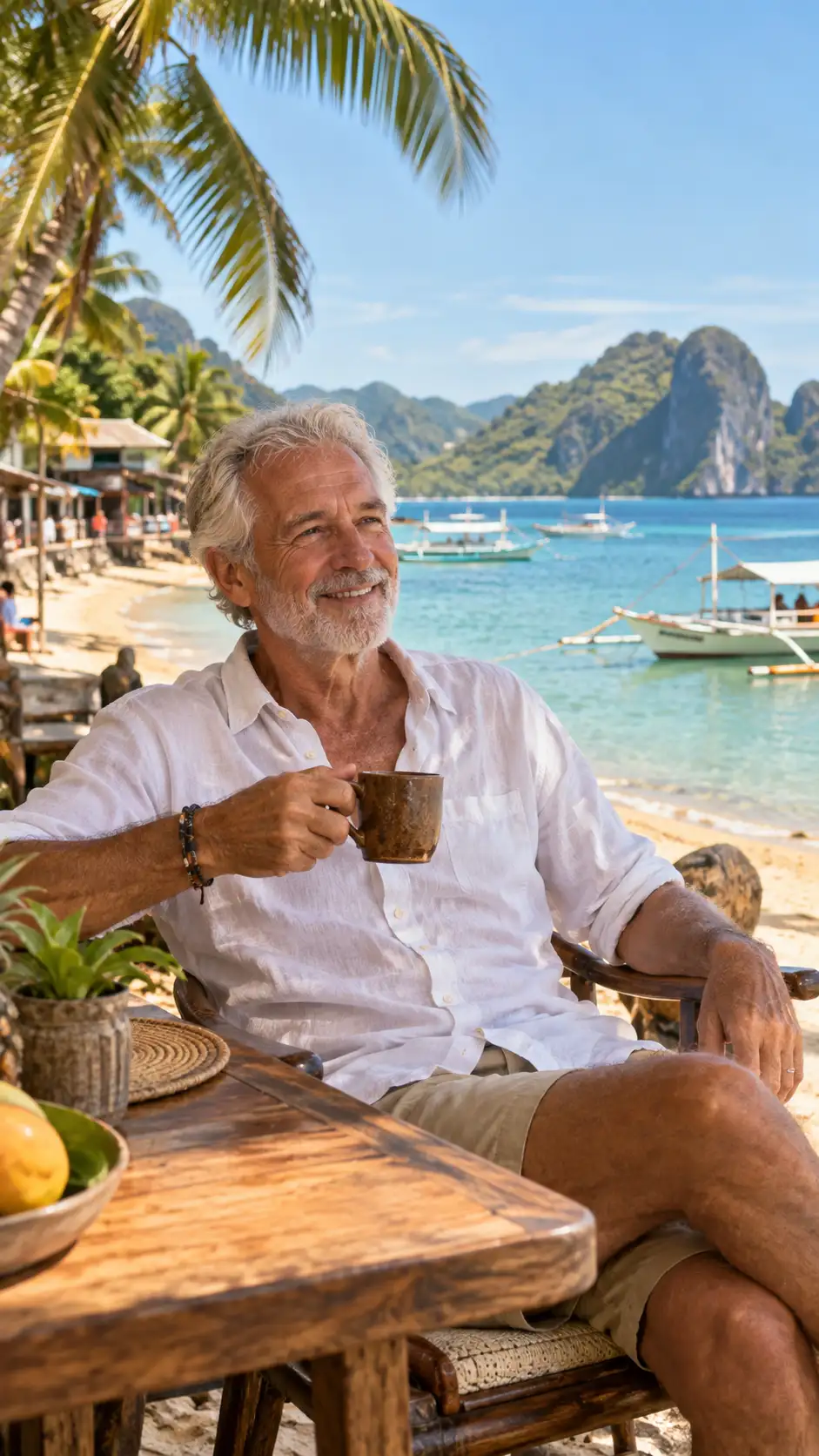
Mornings by the water, local markets at lunchtime, friends in the afternoon: the Philippines can be a strong option for retirees who want an outdoor lifestyle and are comfortable adapting to a different pace of life. English makes daily life easier in many places. The island and location you choose, however, will determine how practical that life really is.
The Special Resident Retiree’s Visa (SRRV) has one clear advantage: retirees applying on the basis of pension income need a lifetime pension of at least US$800 (around €690) a month if applying alone. With dependants, the minimum is US$1,000 (around €860).
For applicants aged 50 and over, the SRRV Classic currently requires a US$15,000 deposit (around €12,920) when a qualifying pension is available. A low pension alone is therefore not enough. The Philippine Retirement Authority publishes the current categories and deposit requirements.
How does healthcare work in the Philippines?
One useful surprise is that SRRV retirees do not have to rely entirely on private cover. They can join PhilHealth. The published special rate is PHP 15,000 (around €206) per year, or roughly €17 a month.
PhilHealth is not comprehensive insurance in the way many European retirees may expect. It only covers part of certain treatment costs. Anyone who wants stronger protection against larger bills in good private hospitals needs additional cover or sufficient reserves. That is why the eventual place of residence should be chosen not just for beaches and rent, but also for access to reliable medical care.
The Philippines is especially interesting for retirees with a limited monthly pension but enough savings for the deposit. Access to PhilHealth also makes the overall healthcare picture more attractive than it may look at first glance.
Quick Facts: pension statement not always required · passive income not required · minimum age 40 · a higher bank deposit can replace the pension requirement

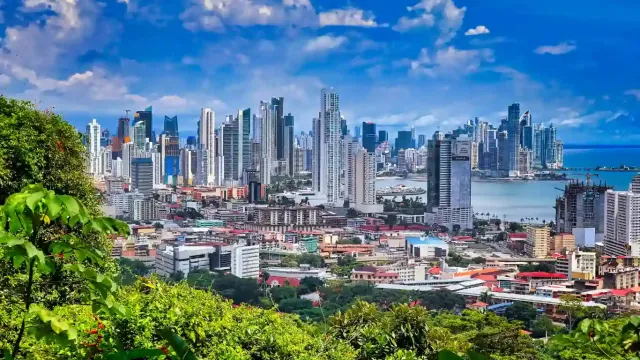
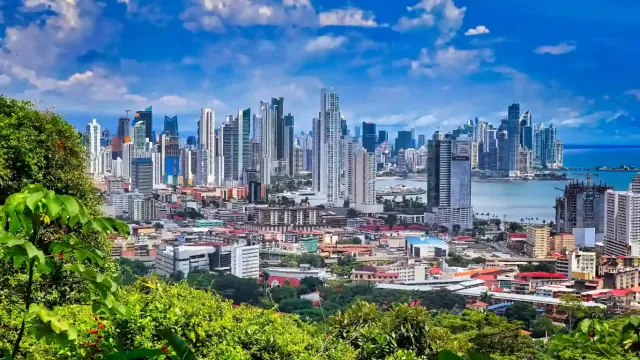
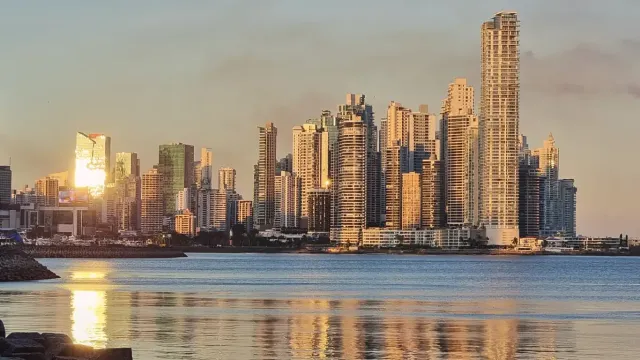
Panama has a straightforward offer for retirees. Anyone who can prove a lifetime pension of at least US$1,000 (around €860) a month can apply for permanent residency as a Jubilado Pensionado. Additional financial support must be shown for dependants. The requirements are set out in the immigration authority’s official guidance.
That relatively modest pension requirement makes Panama attractive. It does not make every part of the country cheap. A modern apartment in Panama City and a quieter home outside the most expensive areas are two very different budgets. If your pension is limited, calculate everyday living costs first and choose the view second.
How does healthcare work in Panama?
One point is often missed: foreign residents are not necessarily forced to rely entirely on private health insurance.
Voluntary CSS membership can also be open to foreign residents. According to the CSS, the combined contribution for health and pension cover is 22% of the recognised contribution base, for example €220 on a €1,000 base.
The catch: admission is subject to conditions. In particular, first-time entry into the relevant B2 group must take place before the statutory retirement age. Someone who only moves to Panama later in life therefore cannot assume they will still be accepted into the system.
For younger retirees or people who establish residency early, the CSS can still provide a useful public healthcare option. Older newcomers should plan an alternative form of cover from the start.
For more on the country, see our page on residency in Panama.
Quick Facts: pension statement required · passive income is not enough · no fixed minimum age · capital does not replace the pension requirement

Costa Rica quickly brings to mind green mountains, coastlines and a slower pace of life. For retirees, however, one of the biggest advantages lies elsewhere: there is a structured route into the country’s public health and social-security system.
For Pensionado residency, the law requires a stable foreign pension of at least US$1,000 (around €860) a month. This threshold is set out in Article 81 of the immigration law. Residency is initially temporary and can be renewed.
How does healthcare work in Costa Rica?
Costa Rica’s Caja Costarricense de Seguro Social (CCSS) is the country’s public health and social-security system. Foreign retirees receiving a pension from abroad can join voluntarily and gain access to public healthcare.
The CCSS treats foreign pensioners as a specific category of voluntary members. Cover includes healthcare as well as benefits related to disability, old age and death. Contributions are based on the contribution base recognised by the CCSS and therefore depend on the individual income situation.
Costa Rica combines a relatively low pension requirement with access to a public healthcare system. Later in life, that can matter more than saving a little more on rent somewhere else.
Quick Facts: pension statement required · passive income only via the separate Rentista category · no fixed minimum age · capital does not replace the Pensionado pension requirement

Looking at Nicaragua purely through the lens of cost misses an important part of the decision. Granada, the lakes and the Pacific coast can be appealing. But retirement also requires rules you can rely on and healthcare you can access when you need it.
The country has long been known for its Pensionado and Rentista routes. The widely quoted US$600 (around €520) minimum for retirees comes from the previous legal framework.
Migration reform has changed the way residency categories are classified. A legal analysis from July 2025 notes that Pensionados and Rentistas are no longer listed among the permanent-residency categories. Anyone considering Nicaragua should therefore verify the current route before applying.
How does healthcare work in Nicaragua?
Nicaragua has a public healthcare system. For newly arrived foreign retirees, however, that does not automatically amount to comprehensive health insurance.
The official travel advice warns of shortages in medical care. Treatments and medicines may have to be paid for directly.
Private cover and sufficient medical reserves should therefore be part of the plan, especially when the pension itself is modest.
Nicaragua can be attractive because of its relatively low financial entry requirements. Against that, the residency position is less clear and medical care comes with greater uncertainty. For retirees with little financial reserve, those issues matter.
Quick Facts: pension statement or permanent passive income · no fixed minimum age · capital alone is not enough

Peru deserves more attention than a passing mention between better-known retirement destinations. The Rentista route is designed for people with a permanent pension or other qualifying recurring income.
The published minimum is US$1,000 (around €860) a month. The source and payment method must meet the requirements. Savings alone do not replace the required income evidence. The starting point is the official Rentista procedure.
How does healthcare work in Peru?
With a Carné de Extranjería and no other health insurance, you can use SIS Para Todos if you meet the enrolment requirements.
There is no monthly insurance premium. The official SIS page confirms this.
That makes Peru one of the most interesting countries in this comparison. A foreign resident can qualify for residency with a relatively modest income requirement and also gain access to public healthcare without a recurring monthly insurance premium.
Peru is therefore one of the stronger options for retirees on a tighter budget: a relatively low income requirement, a clear residency route and access to public healthcare without a monthly premium.
Quick Facts: pension statement not always required · permanent passive income accepted · no fixed minimum age · capital without recurring income is not enough

Everyday life in Guatemala does not have to revolve around expensive trips and big spending. A local market, a café, neighbours and short excursions can bring back some of what a tight retirement budget may have taken away.
Whether that works depends on the specific place you choose, not on a romantic idea of the country as a whole.
Guatemala offers permanent residency for Rentistas and Pensionados with qualifying foreign income. The minimum is US$1,250 (around €1,080) a month.
An additional US$300 (around €260) is required for each financially dependent family member. A current legal overview from Consortium Legal explains this route.
How does healthcare work in Guatemala?
Residency does not automatically provide health insurance through the public IGSS system.
Healthcare therefore needs to be planned separately from residency. Private or local insurance can cover part of the risk. Age, pre-existing conditions, benefit limits and co-payments all matter.
Public facilities are also available. But anyone who regularly needs specialists, specific medication or private hospitals should budget for those costs separately.
Guatemala is better suited to retirees who are willing to learn Spanish, choose their location carefully and adapt to local systems. Anyone expecting a familiar European-style daily routine will need to make bigger adjustments.
Quick Facts: pension statement or permanent passive income accepted · no fixed minimum age · assets without recurring returns are not enough
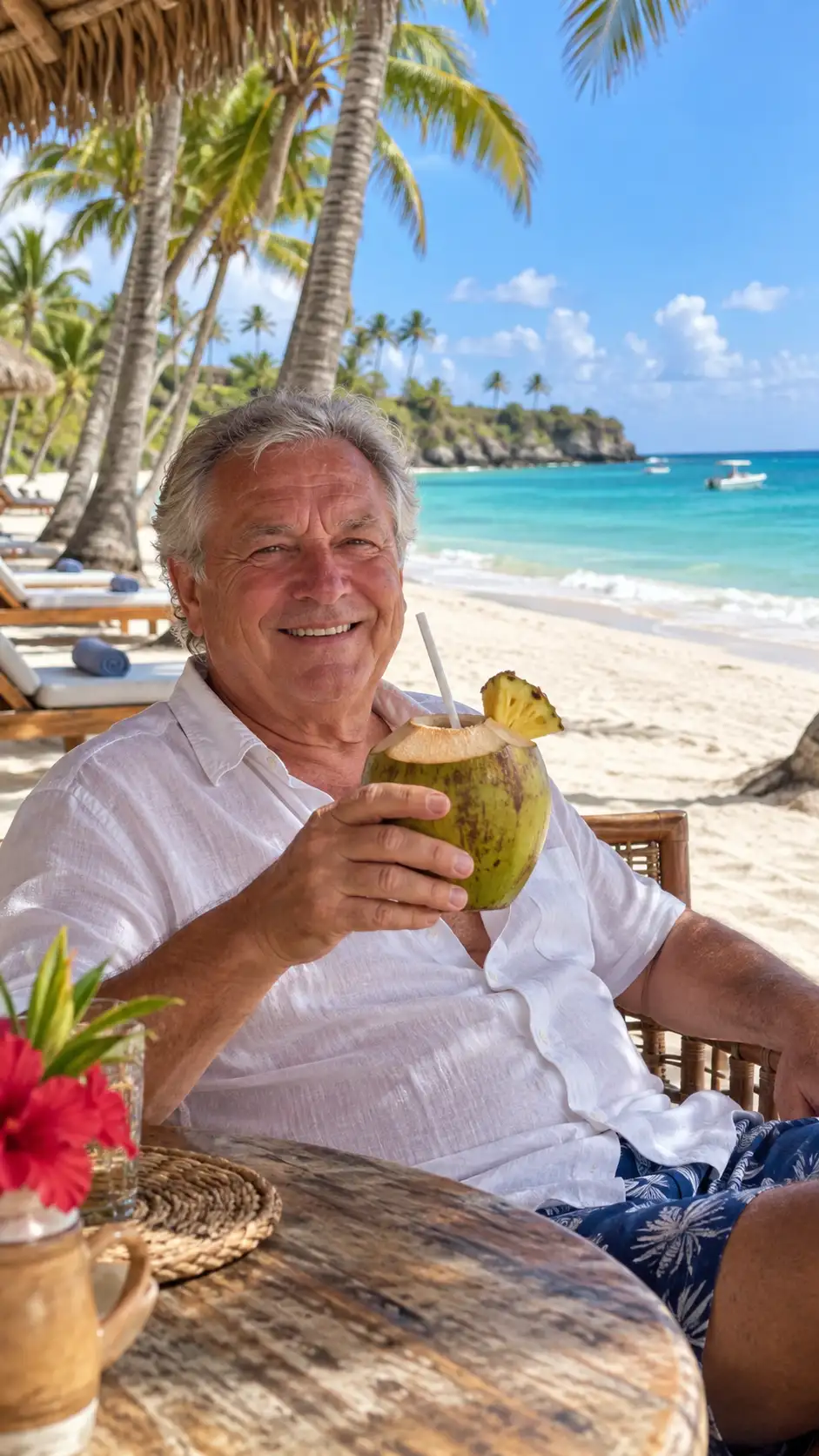
Many people know the Dominican Republic from holidays. That can be misleading when considering a permanent move. In a hotel, electricity, transfers, food and support are organised for you. As a resident, you have to build that everyday life yourself.
The retirement residency route requires a monthly pension of at least US$1,500 (around €1,290). An additional US$250 (around €220) is required for each direct dependant.
Employment income cannot simply be treated as pension income for this category. These amounts are published by the Dominican immigration authority.
Your budget also needs to include electricity, transport and the level of healthcare you want. Anyone who plans to live with air conditioning and use private clinics regularly needs to test that against the actual monthly budget.
How does healthcare work in the Dominican Republic?
Residency does not automatically include free health insurance. Medical cover therefore needs to be arranged separately.
Through SeNaSa Larimar, the state insurer offers a plan that also targets people living abroad or returning to the country. Additional health-related admission requirements apply from age 55.
Private insurance is also available. Later in life, it is important to check which hospitals are actually covered and what co-payments apply before moving.
The Dominican Republic can work well for retirees who genuinely want Caribbean life and have enough income to cover the full monthly picture.
Quick Facts: pension evidence required for the Pensionado route · passive income only via the separate Rentista category · no fixed minimum age · capital alone does not replace the pension requirement

Ecuador offers very different lifestyles within a relatively small country. Anyone who does not want year-round tropical heat may prefer the highlands to the coast. The real question is where everyday life still feels right after the novelty wears off.
The Jubilado visa requires a foreign old-age or retirement pension worth at least three Ecuadorian basic salaries. In 2026, the Salario Básico Unificado is US$482. That puts the current minimum at US$1,446 (around €1,245) per month. An additional US$250 a month must be shown for each dependent family member. (official Jubilado procedure)
The pension status and monthly payment must be documented by an official statement from the relevant foreign institution. Health insurance valid in Ecuador is also required for the duration of the visa.
How does healthcare work in Ecuador?
Foreign retirees with an Ecuadorian ID can join the IESS voluntarily.
That gives newly arrived retirees a route into Ecuador’s public social-security and healthcare system.
The total contribution including healthcare is 17.6% of the recognised contribution base. For foreign retirees, this is generally based on the pension, subject to at least the statutory basic salary.
On a recognised base of €1,500, the contribution would be about €264 a month. Partner health cover can cost an additional 3.41%, around €51 in this example.
That is not a small amount. In return, the retiree gains access to a public insurance system rather than relying exclusively on private senior health insurance. Depending on location and the level of care expected, private supplementary cover can still make sense.
Ecuador is especially relevant for retirees who can meet the pension requirement and want the option of joining a public social-security and healthcare system rather than relying entirely on private cover.
Quick Facts: official old-age or retirement pension required · other passive income is not enough for the Jubilado visa · no fixed minimum age · capital does not replace the pension

Colombia can appeal to retirees who want to remain active in everyday life: shopping locally, going out, meeting people and living in an established neighbourhood.
It makes more sense to compare specific cities and neighbourhoods than to judge the entire country by Medellín’s best-known expat areas.
The M Pensionado visa requires a lifetime monthly pension equal to at least three Colombian minimum wages. In 2026, that is COP 5,252,715, around €1,440 a month. The pension must be documented by an official certificate from the relevant public authority or private pension fund.
Colombia also requires medical evidence and a health-insurance policy valid in Colombia for the duration of the stay. The visa can be granted for up to three years and does not permit employment.
How does healthcare work in Colombia?
The M Pensionado visa generally does not allow enrolment in the Colombian social-security system. Exceptions may arise under international agreements (Article 77).
Private health insurance should therefore be budgeted for under this residency route. Cost depends especially on age, pre-existing conditions and the level of cover.
A later move to a different residency status can change that position.
Colombia can suit retirees who meet the pension requirement and value an active urban lifestyle, but private healthcare cover needs to be part of the budget from the start.
Quick Facts: lifetime pension required · other passive income is not enough · no fixed minimum age · capital does not replace the pension

Thailand is one of those places where a holiday can quickly turn into a bigger question: why go back at all? Eating out, spending more time outdoors and living at a different pace can be extremely appealing.
The classic retirement route starts at age 50. Common options revolve around either THB 65,000 (around €1,700) in monthly income or THB 800,000 (around €20,950) in bank funds.
The application, visa category and later extensions each have their own evidence requirements. The Thai diplomatic mission publishes the basic financial requirements.
This is why “Thailand is cheap” is not a complete retirement strategy. A lower pension can still work if you can meet the bank-deposit requirement. But that capital has to exist and remain in place according to the rules.
How does healthcare work in Thailand?
The standard retirement route does not give foreign retirees without local employment regular access to Thailand’s public health-insurance system.
You should therefore budget for private health insurance or substantial medical reserves. Cost varies significantly with age, pre-existing conditions, deductible and level of cover.
Thailand has excellent private hospitals, especially in major cities. But later in life, access to that level of care can become one of the bigger recurring expenses.
Thailand can offer a very attractive retirement lifestyle. On a smaller pension, however, both the residency requirements and private healthcare need to remain affordable over the long term.
Quick Facts: pension statement not always required · recurring income can be used as financial evidence · minimum age 50 · bank funds can be used as financial evidence

South Africa appeals to a different kind of retirement dream: space, dramatic landscapes and the chance to build a more generous day-to-day lifestyle.
For a very small pension, however, the standard residency route is demanding.
The Retired Person’s Visa currently requires proof of a regular inflow of ZAR 38,000 (around €1,990) a month. This can come from a pension, an irrevocable retirement annuity or assets that generate the required monthly income.
Your personal budget also needs to cover the right location, transport and healthcare. If dependable private services are part of the plan, the calculation cannot stop at cheap restaurant prices.
How does healthcare work in South Africa?
Foreign residents can use public medical facilities. Depending on status and treatment, fees may apply.
The public healthcare system is currently being restructured under National Health Insurance. For retirees who want reliable access to private doctors and hospitals, private cover remains an important part of the budget.
Later in life, these costs can become substantial. They should be calculated alongside location and expected medical needs.
South Africa therefore suits retirees with a stronger income position or additional financial resources. For someone trying to retire on a very tight pension with little reserve capital, the entry requirement is much higher than in many of the Latin American countries in this comparison.
Quick Facts: pension statement not always required · recurring passive income accepted · no fixed minimum age · assets can count if they generate the required recurring funds

Brazil is far too large and varied for a single cost label. A sought-after coastal area, a major-city apartment and a home outside the best-known cities and coastal areas all require very different budgets.
That is why it makes sense to look beyond Rio and the standard beach imagery.
The retirement residency route requires proof of monthly transfers of at least US$2,000 (around €1,720) into Brazil.
That puts Brazil above Panama, Costa Rica and Peru in terms of the financial entry requirement. But the overall calculation includes one advantage that should not be overlooked.
How does healthcare work in Brazil?
Brazil has the SUS, a public healthcare system that is generally also open to foreign nationals.
There is no monthly insurance premium.
For retirees, that is a meaningful structural advantage. Anyone who cannot or does not want to fund expensive international senior health insurance is not automatically left without medical care.
SUS is not equally strong everywhere. Waiting times, regional differences and the quality of individual facilities can mean that some treatment is better handled through private doctors or hospitals.
Private supplementary insurance can therefore improve comfort and choice. The key difference is that it is not the only route to medical care.
Brazil requires a higher monthly pension than several other countries in this comparison. In return, it offers an important advantage: access to the SUS public healthcare system without a monthly insurance premium.
Quick Facts: retirement or survivor-pension status required · additional income can supplement the required amount · no fixed minimum age · capital alone does not replace retirement or pension status

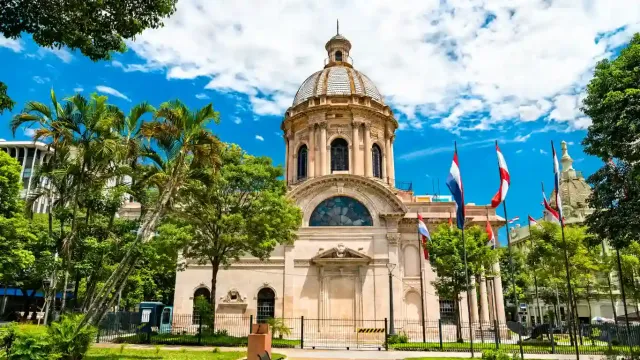
Paraguay works differently from the typical retirement-visa model. The standard temporary residency route does not prescribe a specific monthly pension. Applicants simply need to meet the general residency requirements.
No specific monthly pension is required for temporary residency. When later applying for permanent residency, retirees have been recognised since July 2026 as a specific solvency category. For more detail on the latest rule changes, see our guide to Paraguay residency in 2026.
An apostilled pension certificate showing the amount and payment method can be used as evidence of solvency. The current rules do not specify a statutory minimum pension amount.
For residency in Paraguay, we support clients together with our local partner on the ground. Find out more on our page about residency in Paraguay.
How does healthcare work in Paraguay?
Paraguay has a public healthcare system that is also open to foreign nationals. Services provided through facilities of the Ministry of Public Health and Social Welfare (MSPBS) are generally free, including available medicines and medical supplies within the applicable service catalogue.
In addition, some German-speaking communities have private healthcare options with their own hospitals and, in some cases, their own insurance models. Healthcare standards in these areas are often above the national average.
Paraguay is therefore especially interesting for retirees on smaller pensions: there is no fixed pension requirement for residency, public healthcare is available without a monthly insurance premium, and the general residency route is comparatively straightforward.
Quick Facts: pension statement not required for temporary residency · no fixed monthly pension · no fixed minimum age · residency through the general immigration route · public healthcare without a monthly insurance premium

Uruguay is one of the countries where retirees do not need a special retirement program. Foreign nationals can apply for standard permanent residency.
There is no published fixed minimum pension. Retirees must show regular pension income and its amount. Immigration authorities require sufficient financial means to support yourself, but they do not publish a fixed euro or dollar threshold.
If you use professional assistance for the application, a reasonable market benchmark is around US$2,500 (around €2,150) for a single applicant.
How does healthcare work in Uruguay?
Uruguay has a public healthcare system through ASSE that is also open to foreign residents.
ASSE membership is free for households below the applicable income threshold. The current threshold for a one-person household is 62 UR, currently around €2,550 a month.
That means retirees with up to around €2,000 in monthly income can generally use ASSE free of charge. (ASSE)
Uruguay is therefore attractive for retirees who do not want to meet a high fixed pension requirement and who value a clear residency route and access to public healthcare.
Quick Facts: pension statement not always required · no fixed monthly pension · no fixed minimum age · sufficient means of support required · free ASSE access for a one-person household up to roughly €2,550 in monthly income

If you are retiring on a smaller pension, headline living costs are only part of the picture.
The strongest options combine a low residency barrier, affordable access to healthcare and a monthly budget that is not heavily reduced by mandatory insurance costs.
Based on those criteria, three countries stand out:
There is no fixed monthly pension requirement for standard residency. Since 2026, retirees have also been explicitly recognised as a separate solvency category when moving later to permanent residency.
Public healthcare is generally available without a monthly insurance premium.
Uruguay also has no fixed monthly pension requirement for standard residency. Pension income can be used to show sufficient means of support.
Healthcare is especially strong for lower and middle incomes: ASSE is free below the relevant household-income threshold. For a one-person household, that threshold is currently around €2,550 a month.
Peru does require a pension or qualifying recurring income of US$1,000 a month, but combines that relatively low threshold with an important benefit: qualifying foreign residents can use SIS Para Todos without a monthly insurance premium.
Paraguay is the most flexible budget option because there is no fixed pension requirement and public healthcare is available without a monthly premium.
Uruguay is especially strong for retirees on low to middle incomes because it also has no fixed pension threshold and free ASSE access extends to a relatively high household-income level.
Peru remains the strongest traditional retirement-residency route for smaller pensions, because US$1,000 a month can be enough and public healthcare is also available without a monthly premium.
Last updated: 09/09/2026